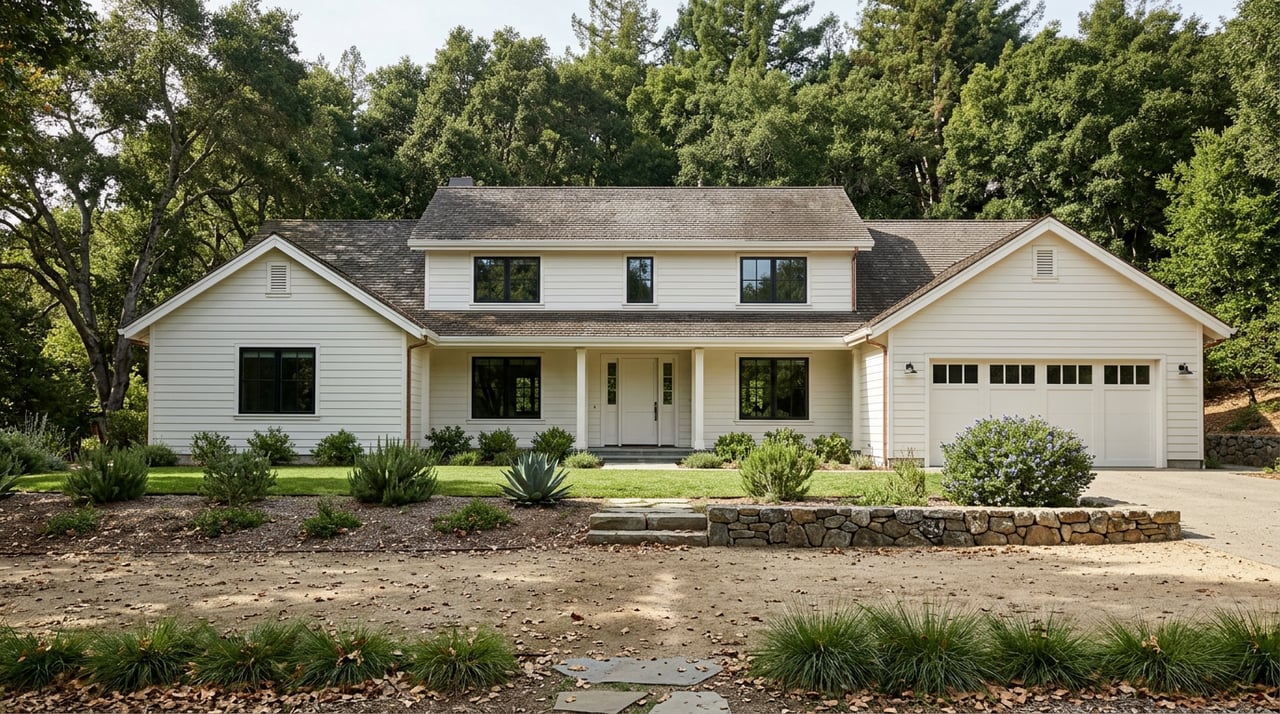
A buyer sees a "handyman special" listed at $3.1 million in Old Los Altos and does the math the way every real estate site teaches you to: square footage, price per foot, compare it to the remodeled place three doors down. The number looks generous. The offer goes in twenty percent over list, confident, well-researched.
It loses. Not to a higher offer from a family who wants to live in the house as-is, but to a builder who never once thought about the floor plan. The builder was pricing the dirt.
That gap between how buyers price a Los Altos property and how the market actually prices it is the thing worth understanding before you write an offer here, not after. In the first half of 2026, single-family sales in Los Altos crossed a median of $5 million for the first time, up 6 percent from 2025, and 73 percent of those homes sold above list price. North Los Altos, the pocket closest to Mountain View and the tech campuses along Highway 101, hit a record average of $2,183 per square foot over the same stretch. Those numbers do not describe houses getting nicer. They describe land getting scarcer, and buyers competing for parcels more than for square footage.
The fixer-upper isn't a discount. It's a different product.
In 2026, a $3 million budget in Los Altos typically buys 1,400 to 1,700 square feet on a 6,500 to 8,000 square foot lot, or it buys a teardown-quality property in one of the more desirable pockets. In Old Los Altos specifically, that same $3 million usually lands on a teardown candidate or a small cottage that needs a full renovation rather than a move-in-ready home. The neighborhood's walkability and its proximity to Main Street carry enough weight that the structure on the lot is treated as incidental, sometimes as a liability once you account for demolition costs.
That is a different product than a fixer in a lower-cost market, where the house still holds most of the value and the lot is a smaller share of the price. Here, the calculation flips. Once you understand that, a listing description that reads "great bones, needs updating" stops being a renovation opportunity and starts being a land acquisition with a building attached.
How a builder actually prices what you're bidding on
Builders and experienced land buyers rarely start with the existing structure at all. They use something closer to a residual land value model: take the projected finished value of a new home on that lot, subtract construction costs, permitting and soft costs, financing, and the profit margin required to make the project worth doing, and what's left over is the maximum price they'll pay for the land underneath.
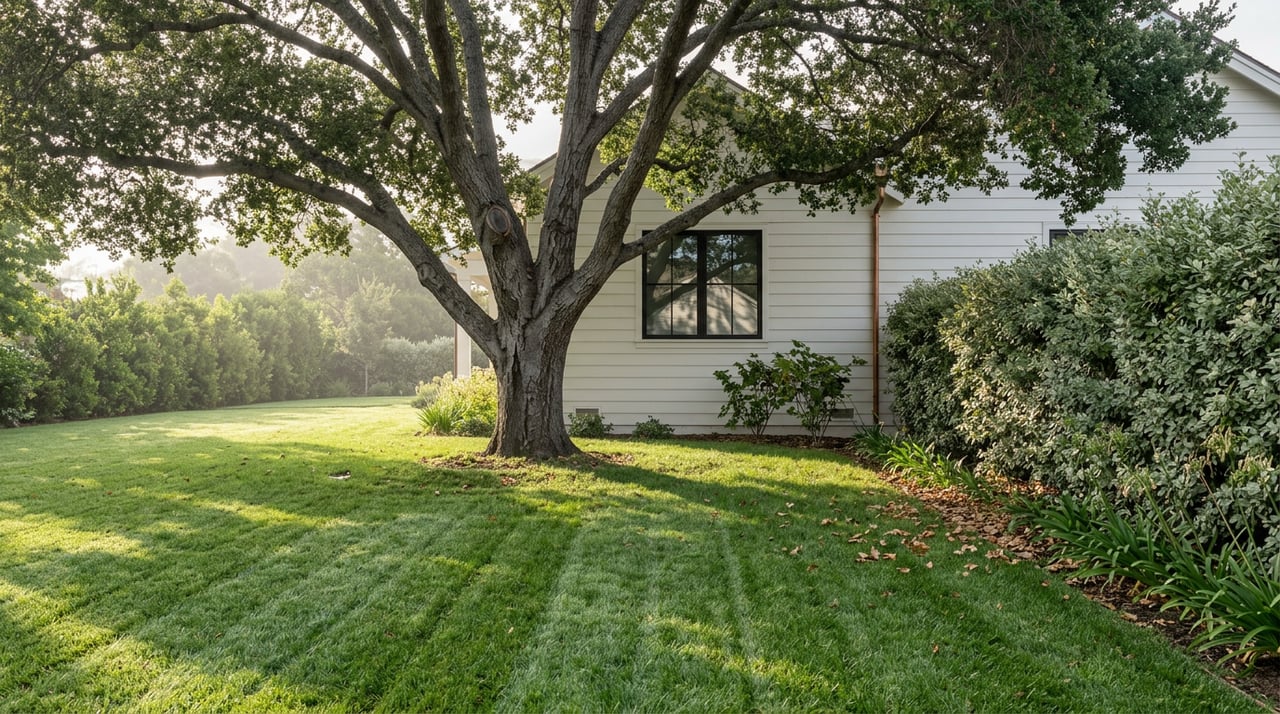
That framework explains why two houses with nearly identical square footage can sell $500,000 apart in Los Altos. It isn't the kitchen. It's frontage, lot depth, slope, protected trees, and how much buildable envelope the zoning actually allows once setbacks and coverage limits are applied. A flat, wide, tree-light lot with clean sightlines to the street is worth more to a builder than a lot with a heritage oak in the exact spot where the new floor plan needs to go, regardless of what's currently built on either one.
If you are bidding against that kind of buyer, comparing your offer to the neighbor's remodeled sale price is the wrong benchmark. The right benchmark is what a builder could net after tearing the existing house down.
SB9 quietly added a new variable to that math
California's Senate Bill 9 lets qualifying single-family lots pursue a ministerial path to two units, either through a duplex-style project on one parcel or through an urban lot split that creates two separate buildable parcels, without the discretionary hearings a project would normally require. Los Altos has adopted its own objective standards under this law, covering setbacks, lot coverage, maximum building height of two stories and 27 feet, and exclusions for lots with historic resources or existing rent-controlled housing. An urban lot split also requires the owner to sign a principal-residence affidavit and hold the property for at least three years.
None of that guarantees your lot qualifies. Frontage requirements, tree protections, and site-specific constraints knock plenty of parcels out of eligibility before anyone gets to the design phase. But for a lot that does qualify, SB9 eligibility is now part of what a builder or investor is pricing in, on top of the base land value. Two comparable lots, one SB9-eligible and one not, are no longer the same asset. Before you assume that potential adds value to a lot you're selling, or before you bid confidently on one you're buying, it is worth confirming eligibility against the city's own standards rather than a listing agent's characterization of them.
Why an identical lot costs more four blocks north
Lot size and structure explain part of the price gap across Los Altos, but not all of it. North Los Altos, which abuts Mountain View and sits closest to Google's and Meta's campuses, commands a premium tied directly to commute distance. Homes within a roughly 15-minute drive of those campuses have traded at an 8 to 12 percent premium over comparable homes 25 minutes out, even when lot sizes are similar. That is a commute premium, not a size or condition premium, and it means a buyer comparing "identical" lots by acreage alone will misjudge the gap every time.
What the city is quietly building around your future lot
Land value in Los Altos does not just move with sales comps. It moves with what the city itself is deciding to build, and this summer that pipeline is unusually visible. In July 2026, the city council reviewed a general plan vision with guiding principles that stretch out to 2050, according to the Los Altos Town Crier. Around the same time, city staff brought residents five revised conceptual designs for a downtown park project, after the council directed staff to drop underground parking from consideration and focus on above-ground options. Meanwhile, Cal Water crews have spent this month working through infrastructure upgrades in south Los Altos.
None of those three items will show up in a comparable sales report next quarter. But a downtown park redesign and a decades-out general plan are exactly the kind of civic decisions that quietly reset what a nearby parcel is worth over a ten-year hold, long before any of it shows up in a Zillow estimate.
Before you make an offer on a teardown-quality lot
A short list worth working through with your agent and a contractor before you go firm on price:
- Confirm the zoning district and whether the lot sits in an R1 variant with its own floor-area and coverage caps, using the city's zoning code rather than a listing description
- Check SB9 eligibility directly against Los Altos' objective standards, including frontage, lot size after any proposed split, and any historic-resource exclusions
- Get a tree survey. Protected and heritage trees can trigger a Tree Removal Permit and mitigation fees that shrink the buildable envelope
- Budget separately for a demolition permit, which requires its own approvals including a BAAQMD asbestos notification and sewer cap coordination, before the building permit process even starts
- Ask what a comparable builder would pay for the lot alone, not what the current house last appraised for
A few questions that come up on almost every Los Altos offer
Does a "needs work" listing price reflect the house or the lot? In most of Los Altos, especially Old Los Altos and North Los Altos, it reflects the lot. The structure's condition affects timeline and holding costs more than it affects the offer price a serious buyer is willing to make.
Does SB9 eligibility automatically raise what I should offer? Not automatically. It can widen the buyer pool for a qualifying lot, but eligibility still depends on frontage, tree constraints, and site-specific limits that a general online estimate won't catch. Confirm it against the city's standards before assuming it adds value.
What should I set aside beyond the purchase price for a teardown-quality property? Plan for a separate demolition permit process, an asbestos notification, tree removal or mitigation fees if protected trees are on site, and standard plan check and building permit costs before construction financing even enters the picture.
If you are weighing a fixer-upper against a move-in-ready home in Los Altos, or trying to figure out what a specific lot is actually worth once you account for its buildable envelope, that is the kind of question worth running past someone who tracks this market week to week rather than guessing from a portal estimate. You can browse current listings and pricing context on the Los Altos neighborhood page, or get a read on what your own property could be worth today through the home valuation tool.
Aaron Buntin works with buyers and sellers across Los Altos and the South Bay who want the math explained before the offer, not after. Start Your South Bay Home Search today.