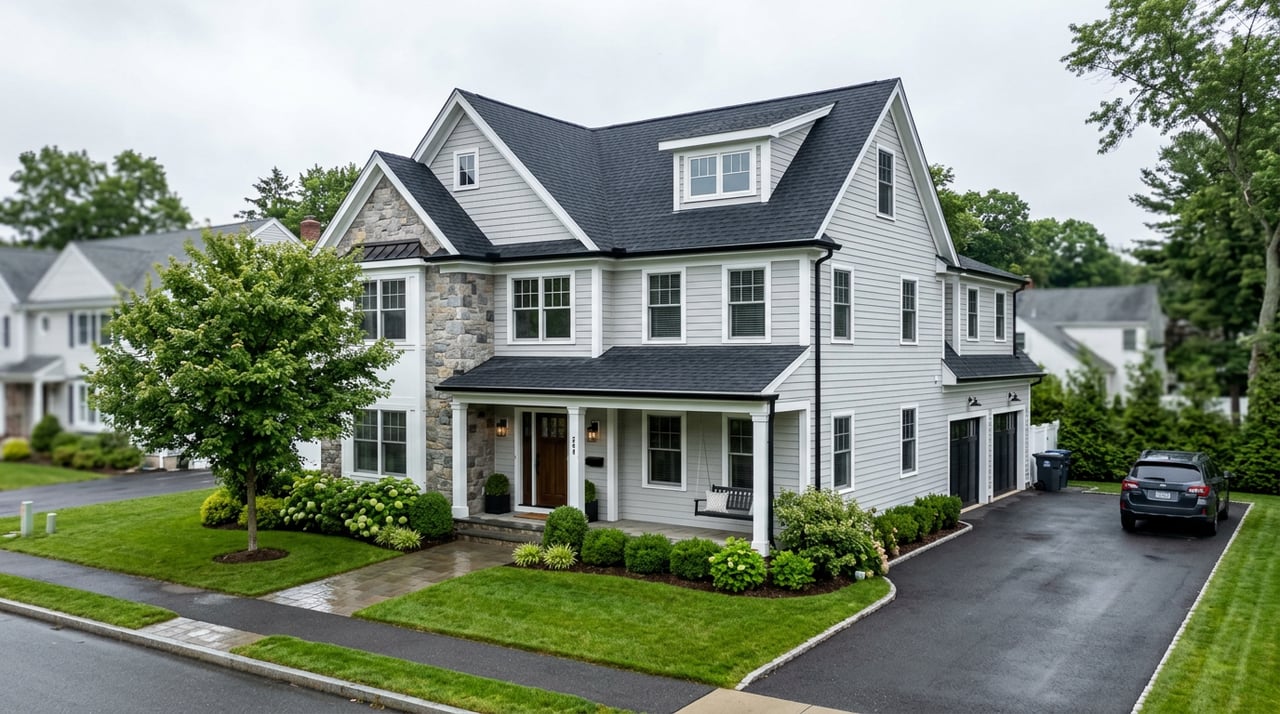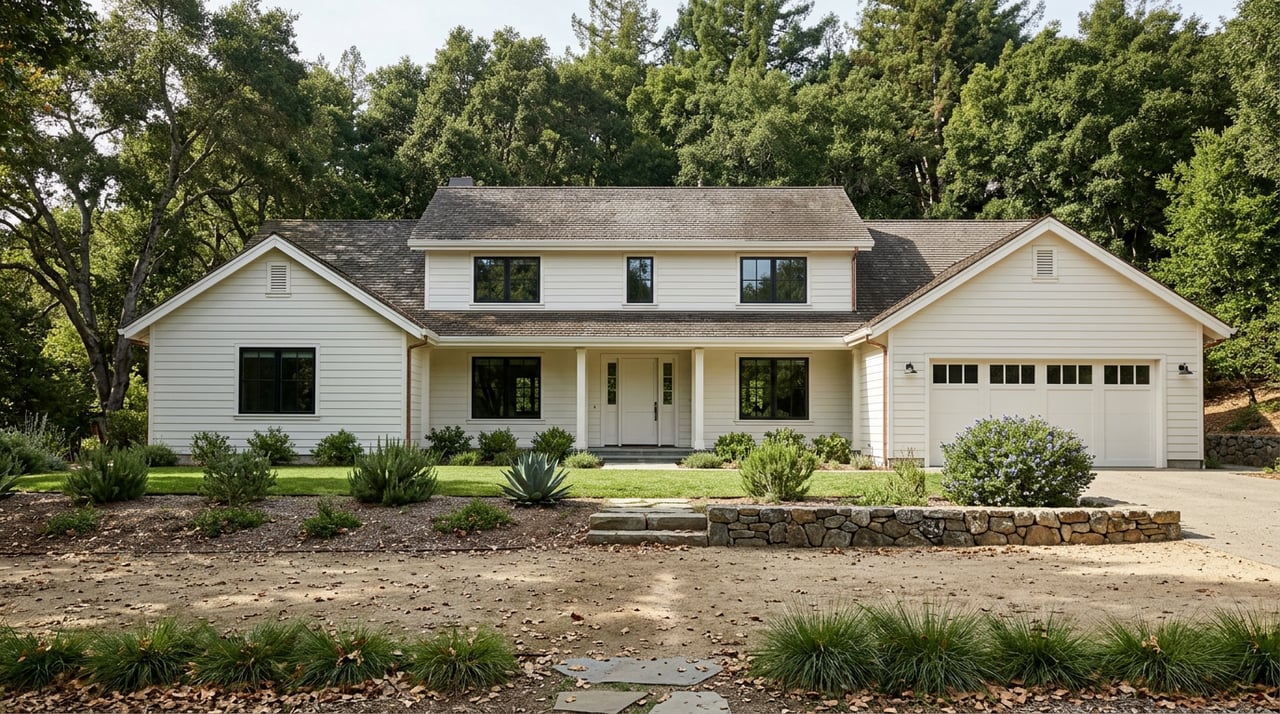
Picture a fairly ordinary Saratoga escrow this year. The inspection comes back clean. The appraisal lands at value. Then the deal wobbles over a form most agents treat as boilerplate: the Fire Hardening and Defensible Space Disclosure. The seller checks the box admitting no one currently knows whether the property meets the state's vegetation clearance standard. That single unchecked certainty sends the buyer's insurance broker down a longer path, past the admitted carriers who won't touch the file, toward the California FAIR Plan, and back to the buyer's lender with a coverage quote that changes the math on the whole purchase.
That sequence is the thing to understand before you list or write an offer on a home in Saratoga's foothills this year. The defensible space disclosure isn't a compliance checkbox you fill out and forget. In a city where CAL FIRE's 2025 mapping update puts something like 80 to 95 percent of the parcels inside a Very High Fire Hazard Severity Zone, that form is often the first piece of evidence an underwriter sees, and what it says can decide whether your buyer gets a normal policy or a much more expensive one.
Why This Form Exists and Who It Applies To
California requires the Fire Hardening and Defensible Space Disclosure, built around Civil Code section 1102.19 and Public Resources Code section 4291, whenever a residential sale of one to four units sits in a High or Very High Fire Hazard Severity Zone and the seller is already completing a standard Transfer Disclosure Statement. Given Saratoga's zone designation, that covers the overwhelming majority of hillside listings above the Village and along corridors like Pierce Road, not just a handful of outlier estates.
The form asks the seller to do one of four things: state that the property is already in documented compliance with the 100-foot defensible space standard, agree that the buyer will obtain that documentation within a year of closing, commit to delivering a compliance report before closing, or admit that no one currently knows the property's status. Every option is legally acceptable. They are not, however, equally useful to your buyer.
The Zone Number That Actually Matters Isn't the One on the NHD
Most buyers glance at the Natural Hazard Disclosure Statement, see the fire zone box checked, and move on, assuming it's background information like an earthquake fault line notice. That assumption misses how insurance underwriting actually works in 2026. Independent Bay Area insurance brokers now describe the FHSZ map as the regulatory floor, not the pricing model. Carriers and the FAIR Plan layer their own proprietary brush and ember scores on top of it, built from slope, vegetation density, road access, and documented mitigation at the specific address. Two homes on the same Saratoga street, in the same fire zone, can land on completely different rungs of the insurance ladder depending on what paperwork exists.
That is the mechanism buyers miss. The defensible space disclosure isn't describing a hazard that exists independently of the transaction. It's often the only documentation an underwriter has to work with when deciding whether your buyer qualifies for an admitted policy, a surplus-lines policy, or gets routed straight to the FAIR Plan.
What Landing on the FAIR Plan Actually Costs a Saratoga Buyer
This is where the math gets uncomfortable for hillside price points. The FAIR Plan, California's insurer of last resort, caps residential coverage at roughly $3 million, even with available endorsements. Rebuilding a larger custom home in the Santa Cruz foothills, the kind common in Saratoga's estate lots and gated enclaves like Parker Ranch, can run well past that ceiling. A buyer who lands on FAIR Plan coverage alone isn't just paying more. They may be structurally underinsured on day one, with no rider or umbrella policy able to close the gap between the cap and the actual rebuild cost.
| Coverage path | What it covers | Typical cost pattern | Caps and gaps |
|---|---|---|---|
| Admitted carrier | Full HO-3 policy: fire, liability, theft, water, loss of use | Lowest of the three options, varies by brush score | Best option if the carrier will still write the zone |
| FAIR Plan + DIC wrap | FAIR Plan covers fire, lightning, smoke only; a separate DIC policy fills liability, theft, water | Ranges widely by zip code, plus a separate DIC premium | Dwelling coverage capped around $3 million regardless of rebuild cost |
| Surplus lines (E&S) | Custom policy through a licensed surplus broker, more flexible limits | Priced individually, no state rate filing required | Faster to place but not rate-regulated |
The FAIR Plan's roughly $3 million dwelling cap was reported industry-wide in 2026, and it doesn't move with the size of the home behind it. A buyer who discovers mid-escrow that they're capped at that limit on a home valued well above it has a real decision to make about financing, not a paperwork inconvenience. Lenders require proof of adequate coverage before funding, and a coverage gap that surfaces two weeks before closing is a much harder problem to solve than one flagged in week one.
Saratoga Just Made Compliance Faster to Prove
Here's the part that changes the calculus for sellers specifically. Saratoga's City Council updated its tree regulations effective March 6, 2026, explicitly to align local rules with the state's evolving defensible space standards. Under the new ordinance, homeowners citywide can remove trees within five feet of a home for wildfire risk reduction without the old public notification and appeal process, as long as a non-flammable zone is established and maintained in that five-foot band. In the Wildland-Urban Interface, trees within 100 feet that create elevated risk can also come down with a permit, and that permit is free for dead trees along with Monterey pine and blue gum eucalyptus, two species the city specifically flags as fire-prone.
That ordinance shortens the runway for a seller who wants to walk into escrow with real documentation instead of an "unknown" box checked. Pair it with two resources that predate the ordinance but now fit into a faster sequence: the Santa Clara County FireSafe Council's no-cost Home Ignition Zone inspection, where a trained representative walks the property for up to an hour and produces written recommendations, and the city's WUI hardening rebate program, which can reimburse up to $10,000 toward qualifying roof and window upgrades. Together they give a seller a real chance to close defensible space gaps before listing rather than leaving them for the buyer to discover.
A Pre-Listing Sequence for Hillside Sellers
If you're preparing to sell a Saratoga home in the Very High Fire Hazard Severity Zone this year, the order of operations matters more than any individual step:
- Confirm your exact zone status using CAL FIRE's own Fire Hazard Severity Zone Viewer rather than relying on an old NHD report, since the statewide maps were substantially redrawn in 2025.
- Request a free Home Ignition Zone inspection from the Santa Clara County FireSafe Council before you list, not after an offer comes in.
- If the inspection flags gaps, use the current tree ordinance's simplified permit path to clear qualifying vegetation within the five-foot and 100-foot bands.
- Apply for the WUI rebate if roof or window hardening is part of the plan. The application window matters more than people expect, since funding runs first come, first served.
- Decide, with your agent, whether you'll deliver compliance documentation before close or let the buyer take on that obligation within the standard one-year window, and be explicit about that choice in your offer terms rather than leaving the disclosure form's default box checked.
- Loop your buyer's lender and insurance broker in early if you know the property has a mitigation history worth documenting. A seller who can hand over a passing Home Ignition Zone report on day one gives the buyer's insurance shopping a real head start.
None of this guarantees an admitted carrier will write the policy. Brush scores, slope, and road access are baked into private models that no amount of paperwork fully overrides. But a documented compliance history is the one lever a seller actually controls, and recent state programs increasingly tie insurance discounts and non-renewal protections to exactly that kind of documentation.
A Few Questions Worth Settling Before You Write an Offer
Does every Saratoga listing require this disclosure? Only if the property has one to four units, the seller is completing a standard Transfer Disclosure Statement, and the home sits in a High or Very High Fire Hazard Severity Zone. Given the city's zone coverage, that describes most single-family hillside listings, but it's worth confirming for any property near the zone boundary.
If a seller shows full compliance, does that guarantee the buyer gets standard insurance? No. Compliance documentation supports an underwriting decision, it doesn't dictate one. Carrier appetite in a given zip code shifts throughout the year, and proprietary brush scores weigh factors beyond vegetation clearance, including road access and structure density nearby.
What if the seller's compliance report is more than six months old? Under the state form's structure, documentation older than six months generally doesn't satisfy the seller's certification option on its own, which is part of why timing a Home Ignition Zone inspection close to your listing date matters more than doing it once years earlier.
Saratoga's hillside inventory rewards buyers and sellers who treat this disclosure as underwriting evidence rather than legal boilerplate. If you're weighing a purchase in the foothills or preparing to list a property above the Village, Aaron Buntin can walk through what your specific parcel's fire zone status means for financing timelines, connect you with the inspection and rebate programs while there's still room in the funding cycle, and help you decide which side of the compliance timeline makes sense for your transaction. For a broader look at how Saratoga compares to its closest hillside neighbor, the Los Gatos vs. Saratoga foothill comparison is worth a read, and you can browse current inventory on the Saratoga homes for sale page.