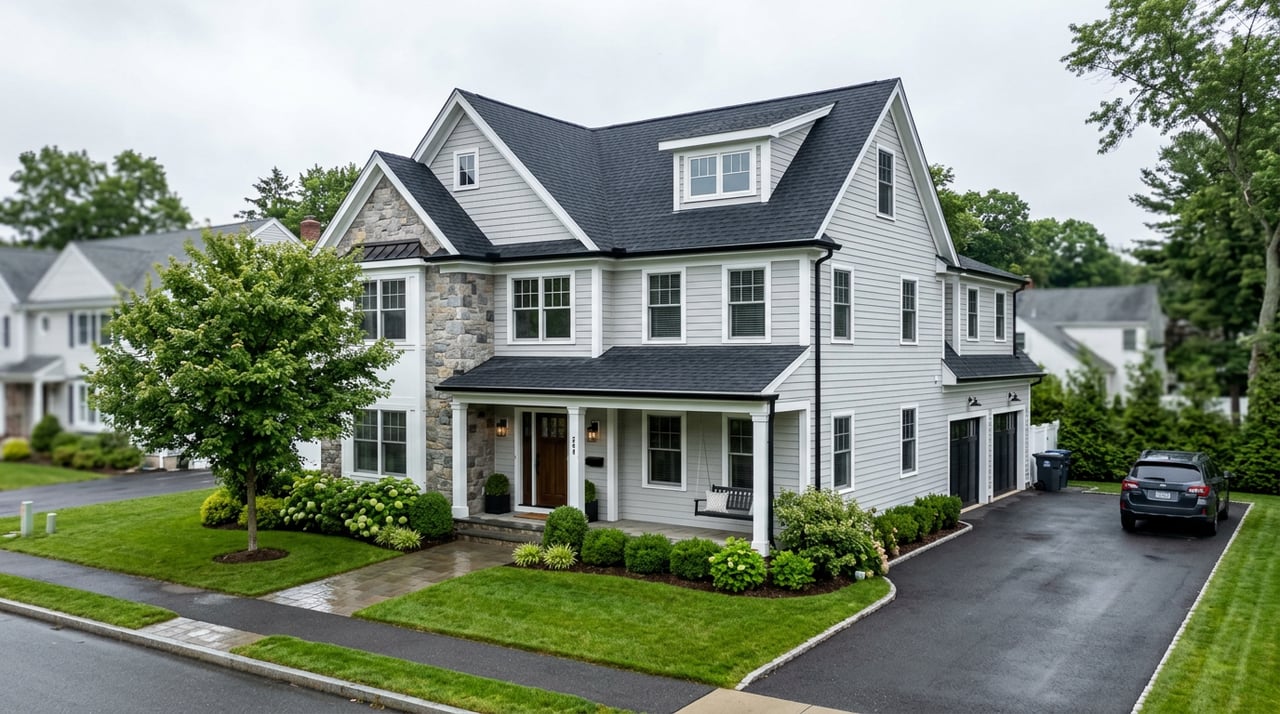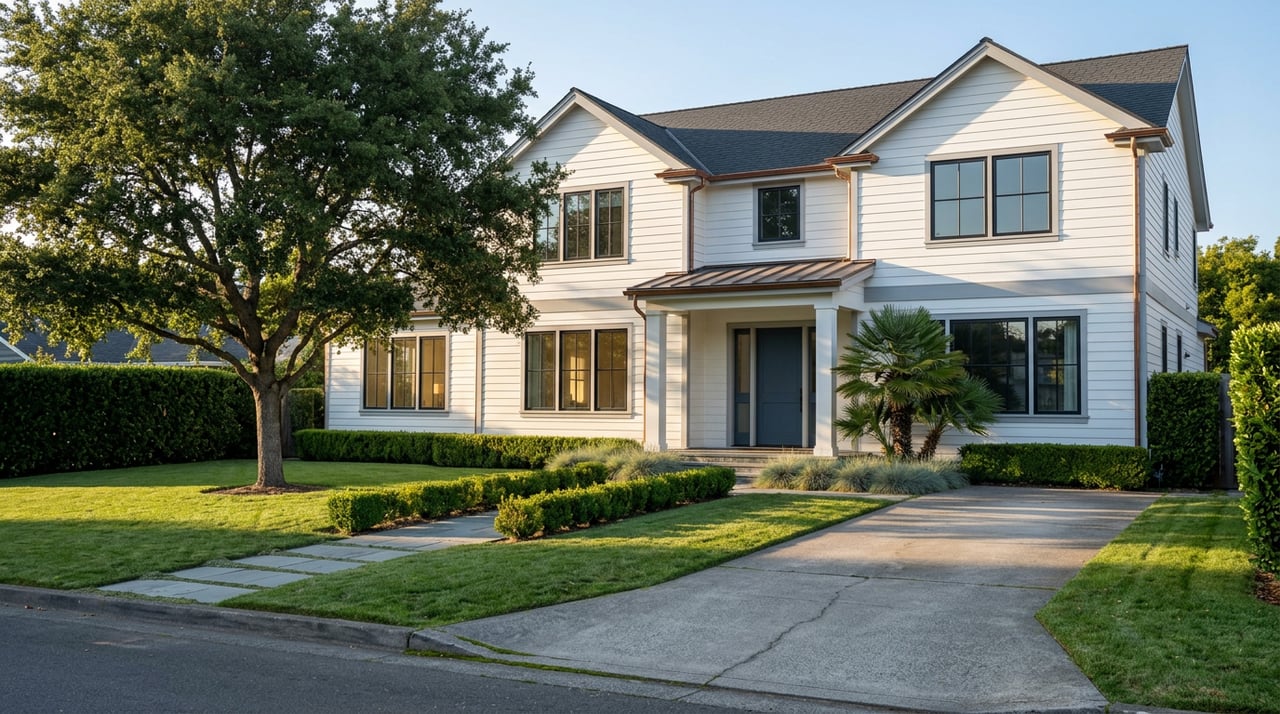
Two Cupertino sellers listed homes on the same week this summer. One, a single-family house on the Westside, drew multiple offers and closed in fifteen days. The other, a condo near City Center, sat through two price reductions before it found a buyer. Same city. Same month. Two completely different outcomes.
If you've been watching Cupertino's headline numbers, that gap probably doesn't square with what you've read. The city's median sale price gets quoted constantly, and it tells a story of scarcity and strength. What it doesn't tell you is that "Cupertino's market" isn't one market. It's at least two, moving in opposite directions, and the line between them runs almost exactly through the fifty acres where Vallco Mall used to stand.
One City, Two Markets
Start with the number everyone quotes. Over the three months ending in August 2026, Cupertino's citywide median sale price came in at $2.9 million, down 11.1 percent from the same period a year earlier. Homes took a median of 16 days to sell, up from 13 days the prior year, and the city sold 77 homes in August compared to 84 the year before. Read on its own, that looks like a market cooling across the board.
It isn't. Break the same window into submarkets and the picture splits.
| Submarket | Median price | Year-over-year | Days on market |
|---|---|---|---|
| Eastside (3 mo. ending June 2026) | $3.1M | +9.7% | 14 (vs. 10) |
| Westside (3 mo. ending June 2026) | $3.5M | +4.3% | 15 (vs. 10) |
| City Center (3 mo. ending Feb 2026) | $785K | -32.3% | — |
Eastside and Westside, both dominated by detached single-family homes, are still appreciating. What changed isn't price, it's volume. Eastside sold 28 homes in June 2026 against 54 a year earlier, roughly half as many transactions producing a higher median. Westside told a similar story, 29 sales against 34 the year before, with days on market climbing from 10 to 15. Fewer sellers are listing, the ones who do are still getting paid, and the math on a shrinking pool of transactions can push a median up even while the broader market slows down.
City Center is the outlier that the citywide median buries. A median sale price down nearly a third in a single year, in a city where the "official" number suggests only mild softening, is not noise. It's a different market wearing the same zip code.
The Fault Line Runs Through Wolfe Road
City Center sits closest to the corner of Wolfe Road and Stevens Creek Boulevard, the fifty-acre site where Vallco Mall operated for decades before it went dark and was mostly demolished. That site is now The Rise, the largest housing project in Cupertino's history, and it has spent 2026 moving from paper to permits.
The developer, Sand Hill Property Company, plans 2,669 total homes across the site. On August 24, 2026, the city approved a fourth modification covering two of the residential buildings in the first phase, known as Blocks 1 and 2. The unit counts didn't change, 235 homes in Block 1 and 258 in Block 2, but the filing adjusted parking, loading access and building details as the project moves toward construction permits. The application came from Black Pine LLC, working with Hines Construction, on behalf of the Vallco property owner.
The first livable phase, called Town Square West, is planned for 1,369 homes: 232 affordable rental units, 744 market-rate rentals and 393 homes built for sale, along with retail space and several acres of public open space. According to reporting from Hoodline, vertical construction is targeted to begin in 2026, with the earliest move-ins arriving around 2028. The city council also agreed to waive roughly $77 million in development fees to help the project pencil out, a concession San José Spotlight reported drew criticism from residents who felt it favored the developer.
None of that means a condo is closing next year. It means the clock on a very large, very visible supply of new attached housing started running in public this year, with dated city approvals anyone can look up.
The Market Is Discounting Homes That Don't Exist Yet
Here's the part that doesn't show up in a headline stat: nobody has to wait until 2028 for a future supply of homes to affect prices today. Buyers and sellers of existing attached housing near the site are already behaving as if that supply is real, because the entitlements are real, the demolition is done, and the modification approvals keep landing on the city council's agenda every few months.
Put yourself in the position of someone selling a 1990s condo three blocks from a site that will eventually deliver 393 brand-new for-sale homes with amenities an older building can't match. A buyer comparing the two doesn't need The Rise to be finished to factor it into an offer. They need to know it's coming, and roughly when. That's a discount on the old inventory long before the new inventory exists, and it's consistent with what the City Center numbers show. This is what economists call anticipation. Markets don't wait for an event to happen. They price the probability of it happening as soon as the information becomes public and credible.
That's a different mechanism than "Cupertino is cooling." It's a supply shock still two years from delivery that's already showing up in what the closest existing homes sell for.
Why the Hills Don't Feel It the Same Way
Eastside and Westside buyers aren't shopping the same competitive set. The premium in those neighborhoods rests on things The Rise doesn't touch: detached lots, proximity to Apple Park, and school assignment, particularly for buyers targeting the Monta Vista attendance area on the city's west side. Monta Vista High School has been recognized among the top academically performing public high schools in the country, and that reputation attaches to land, not to a future condo tower four miles away.
The Rise's for-sale component is also almost entirely attached housing. A buyer comparing a detached Westside home to a future Town Square West unit isn't comparing similar products. They're comparing a house with a yard to a condo with amenities, and those two buyer pools rarely overlap. That's the structural reason the hills are still appreciating while the flats near Wolfe Road are absorbing a discount for something that hasn't broken ground.
Before You Buy or List Near the Site
If you're evaluating a property within walking distance of The Rise, a few things are worth checking before you write an offer or set a list price:
- Confirm the current entitlement phase. Modifications like the one approved in August don't change unit counts, but they signal how close a building is to an actual construction permit.
- Ask what's been announced and what hasn't. As of the most recent approvals, the city has not released pricing, HOA structure or a sales timeline for the for-sale homes at Town Square West. Anything more specific than "2028 target" is speculation.
- Compare recent solds in your specific building or block, not the citywide median. City Center's 32 percent swing shows how far a hyperlocal number can drift from the headline figure.
- Factor in construction reality, not just delivery dates. A fifty-acre site moving from horizontal to vertical construction means years of visible work before anyone moves in, and that timeline has already shifted more than once since the project's original 2018 approval.
A Few Questions Worth Asking
Does the median price still mean anything for Cupertino sellers? It's still useful as a rough temperature check, but it works best when paired with your specific submarket and property type. A Monta Vista single-family listing and a City Center condo are answering to different buyer pools, and the citywide number averages them into a figure that doesn't describe either one well.
Is it worth waiting to buy near Vallco until The Rise delivers? Nobody can promise what the surrounding market looks like in 2028. What's known now is the entitlement status, the phasing, and the fact that pricing for the for-sale units hasn't been announced. A buyer who needs a home today has more certainty in existing inventory than in a future phase without a sales date.
Will new supply at The Rise hurt existing condo values long term? The honest answer is that it depends on how well the retail and public space perform once people move in. Added competition from newer product is a near-term pressure. A genuinely walkable district with restaurants and gathering space could make the surrounding area more desirable once it's built out, the way other Bay Area mixed-use projects have done over time. Both things can be true at different points in the same decade.
If you're weighing a purchase near the Vallco site, comparing Eastside and Westside inventory, or trying to figure out what your current Cupertino home is actually worth against this backdrop, Aaron Buntin has been tracking these submarkets closely and can walk through the numbers that apply to your specific block, not just the citywide average. Start with a look at current Cupertino listings and neighborhood data, or run your address through the home valuation tool to see where it stands today.